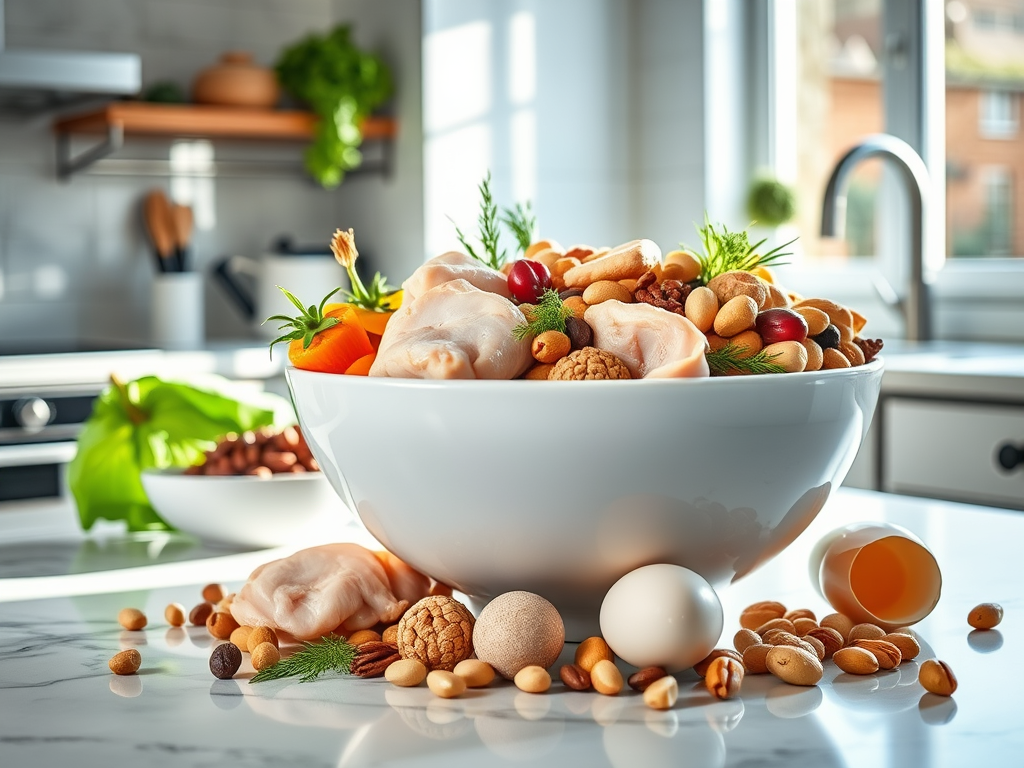
Most people who struggle to lose fat or build a strong, defined body are making one critical mistake. They are not eating enough protein. This is not a minor detail. Protein intake determines whether your body holds on to muscle and burns fat or slowly becomes smaller and softer.
Protein is essential for recovery, preserving lean mass, hormone function, immune health, and even brain performance. Amino acids from protein serve as building blocks for neurotransmitters like dopamine, serotonin, and norepinephrine. These influence motivation, focus, and mental drive [1, 2]. If you feel tired, flat, unmotivated, emotionally inconsistent, or constantly hungry, there is a strong chance your protein intake is too low.
The purpose of this guide is not to entertain. It is to give you a clear formula that produces real results. Read carefully and apply.
Why Protein Is Non Negotiable
Protein does far more than help build muscle. It impacts multiple systems that drive both body composition and how you feel daily.
The proven benefits of higher daily protein intake:
- Preserves muscle during fat loss – In a calorie deficit, your body will break down muscle for energy if protein is inadequate. Protein intake of at least 0.8 to 1.0 grams per pound of bodyweight protects lean mass during fat loss phases [3, 4].
- Boosts metabolism – Protein has the highest thermic effect of food. You burn more calories digesting it compared to carbs or fats. Roughly 20 to 30 percent of protein calories are burned through digestion alone [5].
- Reduces cravings and hunger – Protein increases satiety hormones and decreases ghrelin, your hunger hormone. This naturally reduces snacking and binge tendencies [6].
- Improves recovery and performance – Protein provides essential amino acids that stimulate muscle protein synthesis and repair tissue damage from hard training [3].
- Supports brain function and focus – Tyrosine and tryptophan, amino acids found in protein, are precursors for dopamine and serotonin. These control motivation, mood, and cognitive performance [7, 8]. When protein is low, energy is low.
How Much Protein Do You Need Daily
Most people under eat protein by at least 50 grams per day. The RDA of 0.36 g per pound of bodyweight is written for hospitalized patients and survival, not optimal body composition or performance.
Use these science based targets:
| Goal | Minimum Protein Intake |
|---|---|
| General Health | 0.7 to 0.8 grams per pound of bodyweight |
| Fat Loss with Lifting | 0.8 to 1.0 grams per pound |
| Muscle Gain | 1.0 to 1.2 grams per pound |
| Overweight individuals | Use goal bodyweight |
Example:
If you weigh 190 pounds and want to drop to 160 pounds, calculate protein based on your goal weight.
Target: 160 pounds x 0.8 to 1.0 = 128 to 160 grams of protein per day
If you are not sure what your personal target should be, I can calculate it for you based on your body, goals, and timeline. Reach out and I will break it down for you.
Daily Protein Timing and Meal Structure
Research shows that spreading protein evenly throughout the day increases the anabolic response and maintains more lean mass [9]. Long gaps without protein reduce amino acid availability and increase muscle breakdown.
Follow these guidelines:
- Eat 3 to 5 meals per day
- Target 25 to 45 grams of protein per meal
- Anchor every meal around a lean, high quality protein source
Sample day at 150 grams protein:
- Breakfast: 40 g (eggs + egg whites or Greek yogurt + whey)
- Lunch: 35 g (chicken breast + rice or potatoes)
- Snack: 30 g (cottage cheese or shake)
- Dinner: 45 g (lean beef, salmon, or turkey)
If meal planning and hitting your protein target feels overwhelming, you do not need to figure it out alone. Inside my coaching, I build your meal structure for you so you can execute without overthinking.
Complete Protein vs Incomplete Protein
Not all protein sources are equal. If you want visible results, this distinction matters.
Animal Protein: Complete and Optimal
Animal proteins contain all nine essential amino acids and are naturally higher in leucine. Leucine is the amino acid that triggers muscle protein synthesis. Animal protein has superior bioavailability and stimulates muscle growth more effectively per gram [10, 11].
Best sources:
- Chicken breast
- Lean ground beef
- Eggs and egg whites
- Salmon, cod, tuna
- Greek yogurt
- Turkey breast
- Cottage cheese
- Whey and casein protein
Plant Protein: Incomplete and Less Efficient
Most plant proteins lack one or more essential amino acids. They also contain less leucine, which makes them less effective for muscle retention and fat loss. Studies show plant proteins result in lower anabolic response and require higher total grams to match animal proteins [12, 13].
To make plant based diets work, you must:
- Combine proteins like peas and rice
- Add soy as a complete source
- Use higher total grams of protein
- Consider supplementation to correct amino acid gaps
If you want me to build a high protein meal plan with either animal-based or plant-focused options, I can create one for you that actually fits your lifestyle. Send me a message and I will get you started.
How to Hit Your Protein Goal Easily
Most people fail at protein because they try to wing it. Build structure first.
Simple rules:
- Eat protein first at every meal
- Build meals around high protein anchor foods
- Cook in bulk
- Carry two emergency protein options everywhere
High Protein Meal Anchors
| Food | Protein |
|---|---|
| 6 oz chicken breast | 50 g |
| 1 cup egg whites + 2 eggs | 36 g |
| 1 cup Greek yogurt | 20 g |
| 2 scoops whey isolate | 48 g |
| 6 oz lean ground beef | 42 g |
| 1 can tuna | 32 g |
| 1 cup cottage cheese | 28 g |
If you do not know how to structure meals around these, I can show you how to do it step by step with a simple system so you never have to guess again.
Smart convenience options:
- Kirkland canned chicken
- Fairlife high protein milk
- Ready rice + rotisserie chicken
- Protein bars with 20 g minimum
- Greek yogurt cups + whey scoop
Breakfast Is Destroying Most Diets
People who struggle with fat loss usually start their day with low protein. Cereal, oatmeal alone, smoothies without protein, avocado toast, or bagels create cravings later in the day.
Fix breakfast and fat loss becomes easier.
Protein based breakfast ideas:
- Egg scramble with turkey bacon
- Greek yogurt, whey, and berries
- Cottage cheese with fruit and honey
- Protein oatmeal with whey stirred in
- Breakfast burrito on high protein tortilla
Front loading protein improves appetite control and decision making the rest of the day. If you want me to build you a breakfast rotation that fits your macros and saves time in the morning, reach out and I will send you a starter version.
Common Protein Myths You Must Ignore
- “High protein is bad for kidneys” – False. Numerous controlled studies show no adverse effects in healthy individuals [14].
- “You can only absorb 30 g of protein per meal” – False. Larger individuals and trained athletes benefit from 40 to 60 g servings [9].
- “You need supplements to hit your goal” – False. Whole food works. Supplements simply make it easier.
- “Plant protein is just as good” – Not true for body composition without strategic amino acid balancing [12].
- “Protein makes women bulky” – Completely false. Protein preserves lean definition while reducing body fat.
Simple Fat Loss Meal Formula
Use this plate structure to guarantee success:
- Protein first
- Add carbs for energy
- Add vegetables for volume
- Use healthy fats sparingly
Example:
- 6 oz grilled chicken
- 1 cup jasmine rice
- 1 cup broccoli
- 1 tbsp olive oil
You can rotate foods and keep results predictable.
Troubleshooting: Why You Still Might Be Stuck
If you are already hitting your protein target and weight loss is slow, check these:
- Your total calories are too high
- You are snacking more than you think
- You are not tracking honestly
- You are training without progressive overload
- You are under 6 thousand steps per day
- Your weekends are destroying weekday progress
- Your sleep is below six hours regularly
Fixing these will unlock consistent progress.
Final Word
There is nothing advanced about transformation. It is built on structure and execution. Daily protein intake is the first lever you must control if you want to change your body in a measurable way. If you do not hit your target, nothing else matters.
Stop guessing. Set your number today. Hit it.
Free Tool: Find Your Protein Target
If you want step by step clarity on what is holding back your fat loss, take the Peak Physique Fat Loss Diagnostic Quiz. It takes 30 seconds and gives you a simple plan with your starting macros and next steps.
Take the quiz here to get your custom protein target:
References
- Fernstrom JD. Large neutral amino acids transport at the blood–brain barrier: implications for brain function. American Journal of Clinical Nutrition. 2013;98(2):557S–562S. doi:10.3945/ajcn.112.038471.
- Glick SD, Segal DS. Brain function: role of neurotransmitter precursors. Science. 1969;164(3885):323–325. doi:10.1126/science.164.3885.323.
- Phillips SM, Van Loon LJC. Dietary protein for athletes: from requirements to optimum adaptation. Journal of Sports Sciences. 2011;29(S1):S29–S38. doi:10.1080/02640414.2011.619204.
- Paddon-Jones D, Leidy H. Dietary protein and muscle in older persons. American Journal of Clinical Nutrition. 2014;99(6):1462S–1466S. doi:10.3945/ajcn.113.073106.
- Westerterp KR. Diet-induced thermogenesis. Nutrition & Metabolism. 2004;1:5. doi:10.1186/1743-7075-1-5.
- Weigle DS, Breen PA, Matthys CC, Callahan HS, Meeuws KE, Burden VR, Purnell JQ. A high-protein diet induces sustained reductions in appetite, ad libitum caloric intake, and body weight. American Journal of Clinical Nutrition. 2005;82(1):41–48. doi:10.1093/ajcn/82.1.41.
- Deijen JB, Wientjes CJ, Vullinghs HF, Cloin PA, Langefeld JJ. Tyrosine improves cognitive performance and reduces blood pressure in cadets after one week of a combat training course. Brain Research Bulletin. 1999;48(2):203–209. doi:10.1016/S0361-9230(98)00095-7.
- Young SN. The effect of raising and lowering tryptophan levels on human mood and social behavior. American Journal of Clinical Nutrition. 1996;67(4):789S–797S. doi:10.1093/ajcn/67.4.789S.
- Areta JL, Burke LM, Ross ML, et al. Timing and distribution of protein ingestion during prolonged recovery from resistance exercise alters myofibrillar protein synthesis. Journal of Physiology. 2013;591(9):2319–2331. doi:10.1113/jphysiol.2012.244897.
- Tang JE, Manolakos JJ, Kujbida GW, Lysecki PJ, Moore DR, Phillips SM. Minimal whey protein with carbohydrate stimulates muscle protein synthesis following resistance exercise in trained young men. Journal of Applied Physiology. 2007;103(1): 341–348. doi:10.1152/japplphysiol.00006.2007.
- Morton RW, Murphy KT, McKellar SR, et al. A systematic review, meta-analysis and meta-regression of the effect of protein supplementation on resistance training–induced gains in muscle mass and strength in healthy adults. British Journal of Sports Medicine. 2018;52(6):376–384. doi:10.1136/bjsports-2017-097608.
- van Vliet S, Burd NA, van Loon LJ. The skeletal muscle anabolic response to plant versus animal-based protein consumption. Nutritional Reviews. 2015;73(9):667–685. doi:10.1093/nutrit/nuv027.
- Gorissen SHM, Crombag JJ, Senden JM, Waterval W, Bierau J, Verdijk LB, van Loon LJ. Protein content and amino acid composition of commercially available plant-based protein isolates. Nutrients. 2018;10(7):970. doi:10.3390/nu10070970.
- Poortmans JR, Dellalieux O. Do regular high-protein diets have potential health risks on kidney function in athletes. International Journal of Sport Nutrition and Exercise Metabolism. 2000;10(1):28–38. doi:10.1123/ijsnem.10.1.28.
Leave a Reply