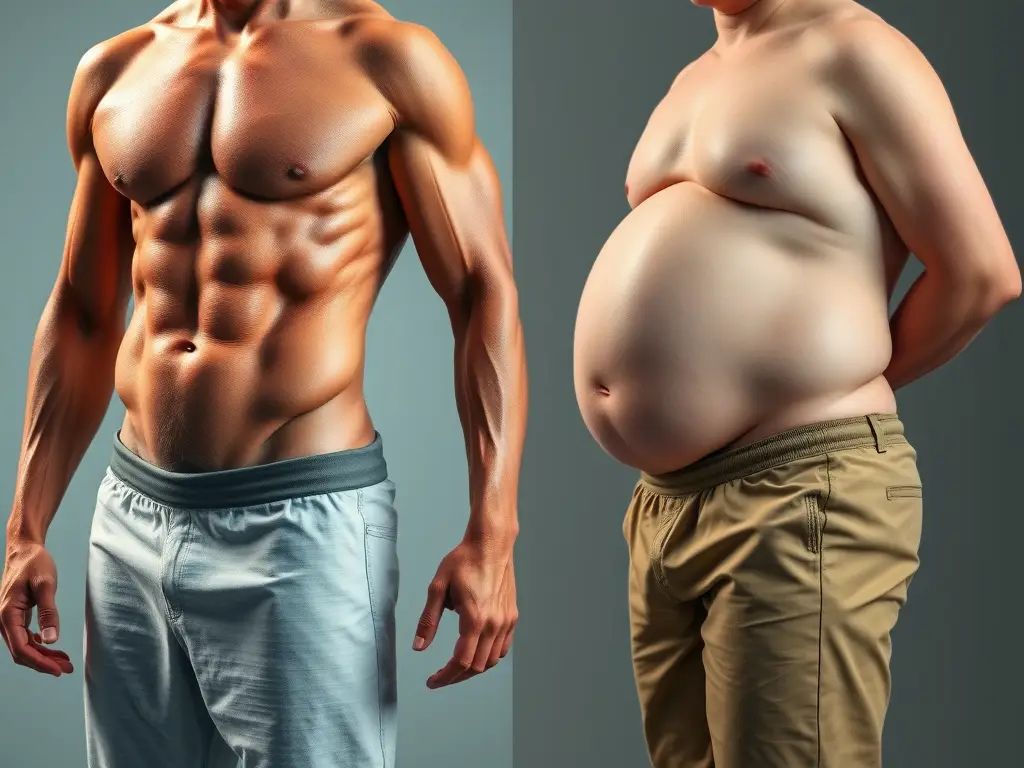
They Need to Stop Losing Muscle
There is a hard truth most people are not ready to hear:
The majority of Americans do not have a weight problem.
They have a body composition problem.
They are not “too heavy” because they carry too much mass.
They are heavy because they carry too little muscle and too much fat.
Those are not the same thing.
The Real Problem: Low Muscle, Low Bone Density, Poor Metabolic Health
Most adults today exhibit:
- Reduced skeletal muscle mass
- Declining bone mineral density
- Impaired insulin sensitivity
- Low metabolic reserve
This is well documented in population data showing rising rates of sarcopenia and sarcopenic obesity even in middle-aged adults, not just the elderly (1,2).
When people are told to “just lose weight,” the result is often predictable:
They lose lean mass first, not fat.
Loss of lean mass is strongly associated with:
- Increased mortality risk
- Poor glucose regulation
- Frailty and fall risk
- Reduced resting metabolic rate
This is not health. This is metabolic erosion.
Weight Loss Is Not the Same as Fat Loss
Body weight is a crude metric. It does not differentiate between:
- Fat mass
- Skeletal muscle
- Water and glycogen
- Bone mineral content
Studies consistently show that during calorie restriction, 20–40 percent of weight lost can come from lean tissue when resistance training and protein intake are inadequate (3,4).
Losing weight while losing muscle worsens long-term metabolic health and makes weight regain more likely.
This is why “eat less and move more” fails so often.
Hormones Dictate What Tissue You Lose
Fat loss is hormonally regulated, not just calorically regulated.
Key hormones involved include:
- Insulin
- GLP-1
- GIP
- Glucagon
- Testosterone
- Estrogen
- Growth hormone
- Cortisol
When these systems are dysregulated, the body preferentially burns muscle, not fat.
This is why aggressive dieting without resistance training or protein leads to:
- Reduced resting energy expenditure
- Lower anabolic signaling
- Increased fat regain once dieting stops
Clinical data show that preservation of lean mass is one of the strongest predictors of long-term metabolic health and mortality risk (5).
The GLP-1 Era Exposed a Bigger Problem
GLP-1–based medications have demonstrated that significant weight loss is possible at scale.
However, multiple trials show that lean mass loss can account for 25–40 percent of total weight lost, depending on protein intake and training status (6,7).
This does not mean these medications are inherently harmful. It means they are often used incorrectly.
Without:
- Adequate protein intake
- Progressive resistance training
- Intentional muscle preservation
Weight loss becomes tissue loss.
What Actually Works Long Term
Sustainable fat loss requires protecting the tissue that drives metabolism.
That means:
1. Preserve or build lean mass
- Progressive resistance training 2–5x per week
- Protein intake of approximately 1.6–2.2 g per kg of bodyweight
- Sufficient recovery and sleep
2. Support metabolic health
- Daily movement and step volume
- Improved insulin sensitivity
- Avoiding chronic aggressive caloric deficits
3. Use weight loss tools intelligently
- Medications should support behavior, not replace it
- Fat loss should occur slowly enough to preserve lean tissue
- The goal is metabolic resilience, not scale validation
The Bottom Line
Most people do not need to lose more weight.
They need to build muscle, protect bone density, and improve metabolic function.
Losing weight while becoming weaker and metabolically fragile is not health. It is simply a different form of dysfunction.
True progress is measured in strength, resilience, and long-term metabolic capacity, not just the number on a scale.
References
- Janssen I, et al. Skeletal muscle mass and distribution in 468 men and women aged 18–88 years. Journal of Applied Physiology. 2000.
- Batsis JA, Villareal DT. Sarcopenic obesity in older adults. The Lancet Diabetes & Endocrinology. 2018.
- Weinheimer EM, Sands LP, Campbell WW. A systematic review of the effect of weight loss on lean mass. Obesity Reviews. 2010.
- Pasiakos SM et al. Protein supplementation increases muscle mass during energy deficit. Journal of Nutrition. 2013.
- Srikanthan P, Karlamangla AS. Muscle mass index as a predictor of longevity. American Journal of Medicine. 2014.
- Jastreboff AM et al. Triple–hormone receptor agonist retatrutide for obesity. New England Journal of Medicine. 2023.
- Heymsfield SB et al. Lean mass loss during weight loss interventions. Obesity Reviews. 2014.
Leave a Reply