PCOS Series (Part 2): The Hormonal Accelerator
In Part 1, we talked about how insulin resistance is the main problem in PCOS. Now let’s look at how that insulin problem messes up your hormones even more.
The Hormone Imbalance: LH and FSH
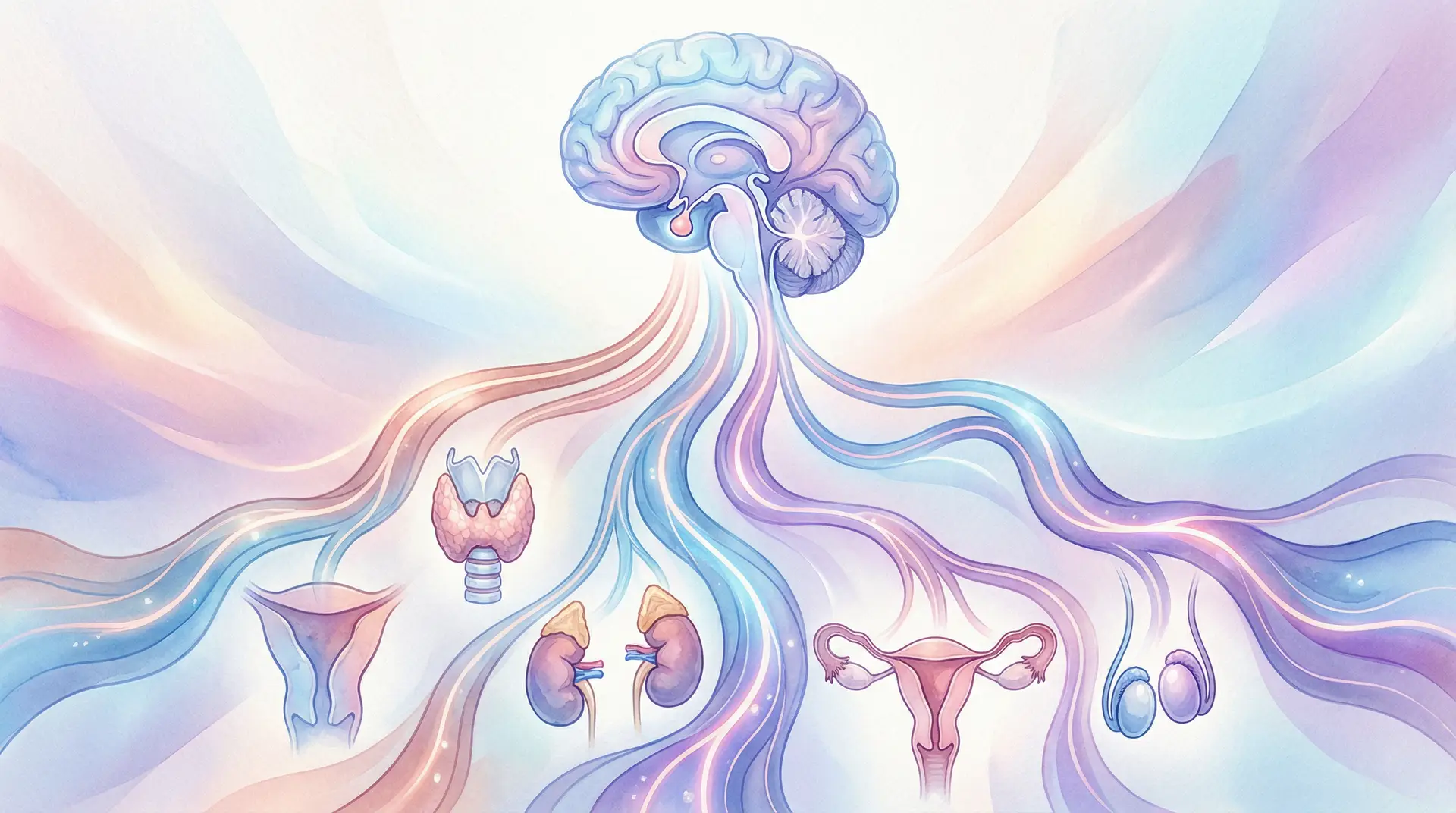
In a normal cycle, your brain releases hormones in a steady rhythm. This tells your body to make the right amounts of two important hormones: LH (Luteinizing Hormone) and FSH (Follicle-Stimulating Hormone).
In PCOS, this rhythm gets messed up:
- Faster Brain Signals: The hormone environment in PCOS (high testosterone from insulin resistance and low progesterone from not ovulating) makes your brain send signals too fast.
- Too Much LH: These fast signals create more LH than FSH. This is why doctors often see a high LH-to-FSH ratio in PCOS patients.
- Ovaries in Overdrive: The high LH, combined with the high insulin we talked about in Part 1, tells your ovaries to make even more testosterone.
This creates a loop: too much testosterone messes up the brain signals, which creates more LH, which—with high insulin—creates even more testosterone.
Key Takeaways
- LH/FSH Imbalance: Fast brain signals create too much LH compared to FSH, which drives testosterone overproduction.
- A Loop That Feeds Itself: High testosterone creates more of the hormones that make high testosterone.
- Insulin Makes It Worse: The LH problem is bad, but insulin makes it way worse by acting like fuel on the fire.
Take Action
Ready to stop guessing and start taking action? Follow me on IG @SeanFitEngineer and subscribe to the newsletter for my weekly deep-dive on controlling your metabolism.
Want a personalized approach? Book Your Free Strategy Call to see if we’re a fit.
Follow @SeanFitEngineer on Instagram Book Your Free Strategy Call
References
[1] Rosenfield, R. L., & Ehrmann, D. A. (2016). The Pathogenesis of Polycystic Ovary Syndrome (PCOS): The Hypothesis of PCOS as Functional Ovarian Hyperandrogenism Revisited. Endocrine Reviews, 37(5), 467–520. https://www.ncbi.nlm.nih.gov/pmc/articles/PMC5045492/
Leave a Reply